Reflections from BOMA MRE San Diego

Ajay Kapoor, CEO, TouchSource
We recently wrapped up two days at BOMA MRE in San Diego, and one idea from the opening keynote stayed with me the entire time:
In medicine, much of what we accept as truth started as conventional wisdom that was never challenged. Progress only happens when data and technology forces people to revisit those assumptions.
That same shift is now happening in healthcare real estate. For years, buildings have been treated as static environments. Technology was considered helpful, but not essential. Something layered on after construction rather than something that fundamentally changes how a building performs.
That mindset is breaking down.
The operators and owners I spent time with are asking different questions now. Not “What technology do we have?” but “What is it actually doing for us?”
- Is it improving the patient experience and journey in measurable ways?
- Is it generating revenue or influencing leasing value?
- Is it providing insights we can act on?
There is a growing expectation that digital infrastructure should produce outcomes, not just exist.
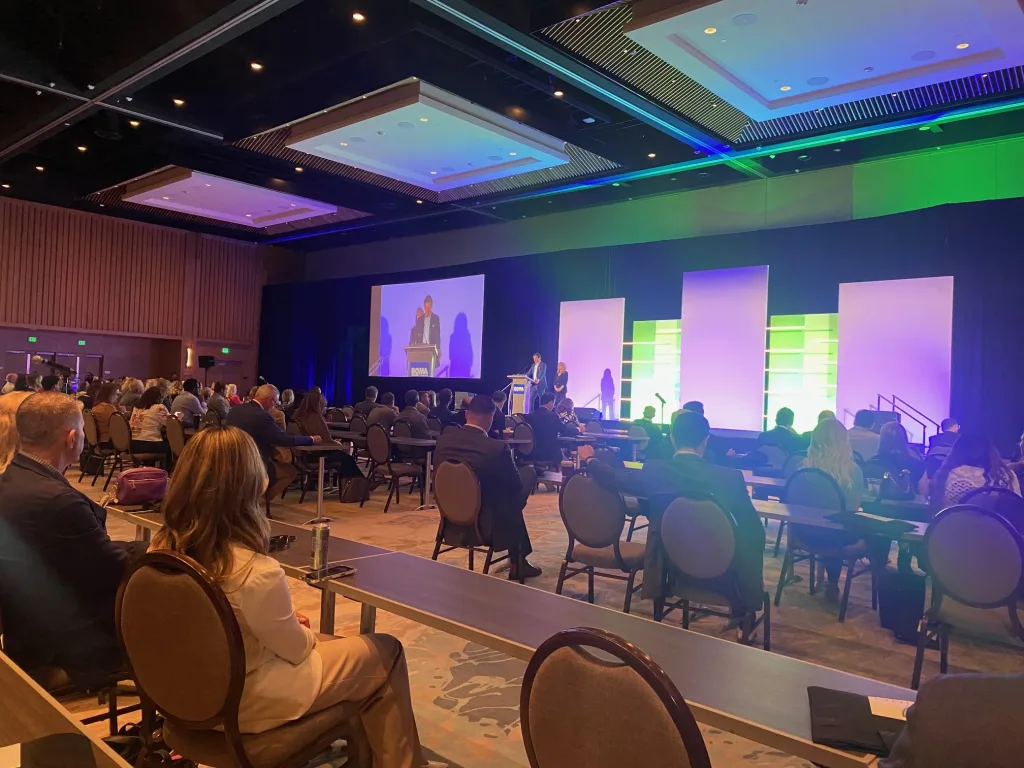
Opening Keynote | BOMA MRE 2026
From Directories to Digital Infrastructure
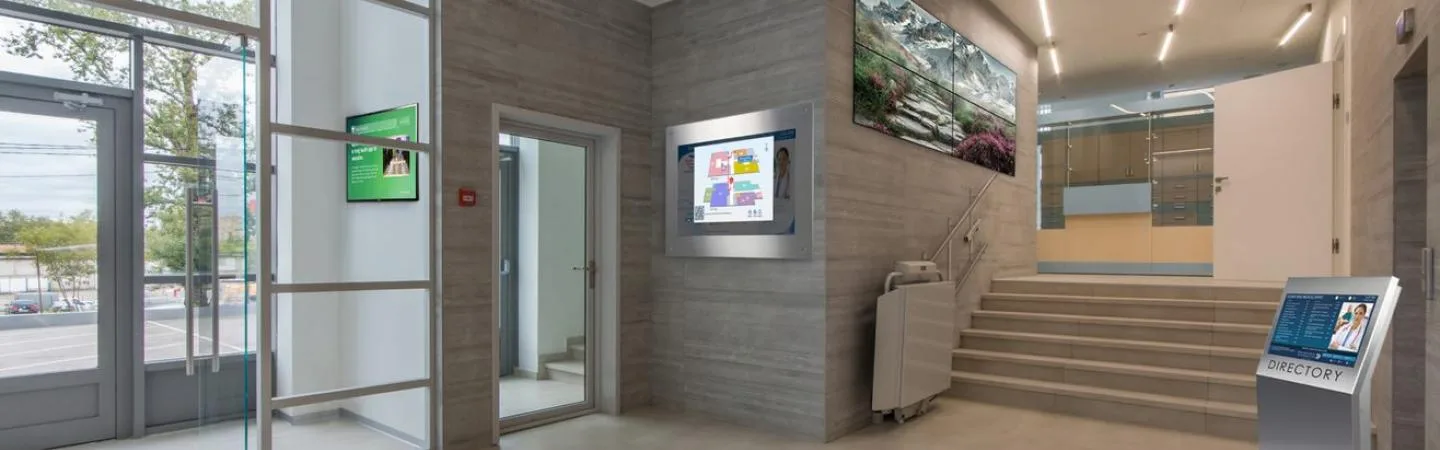
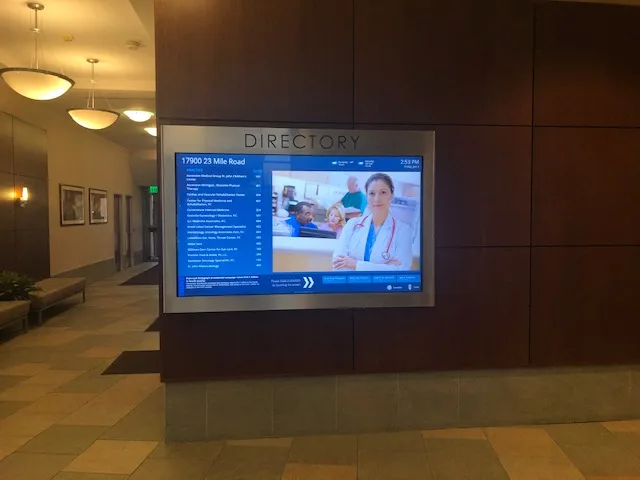
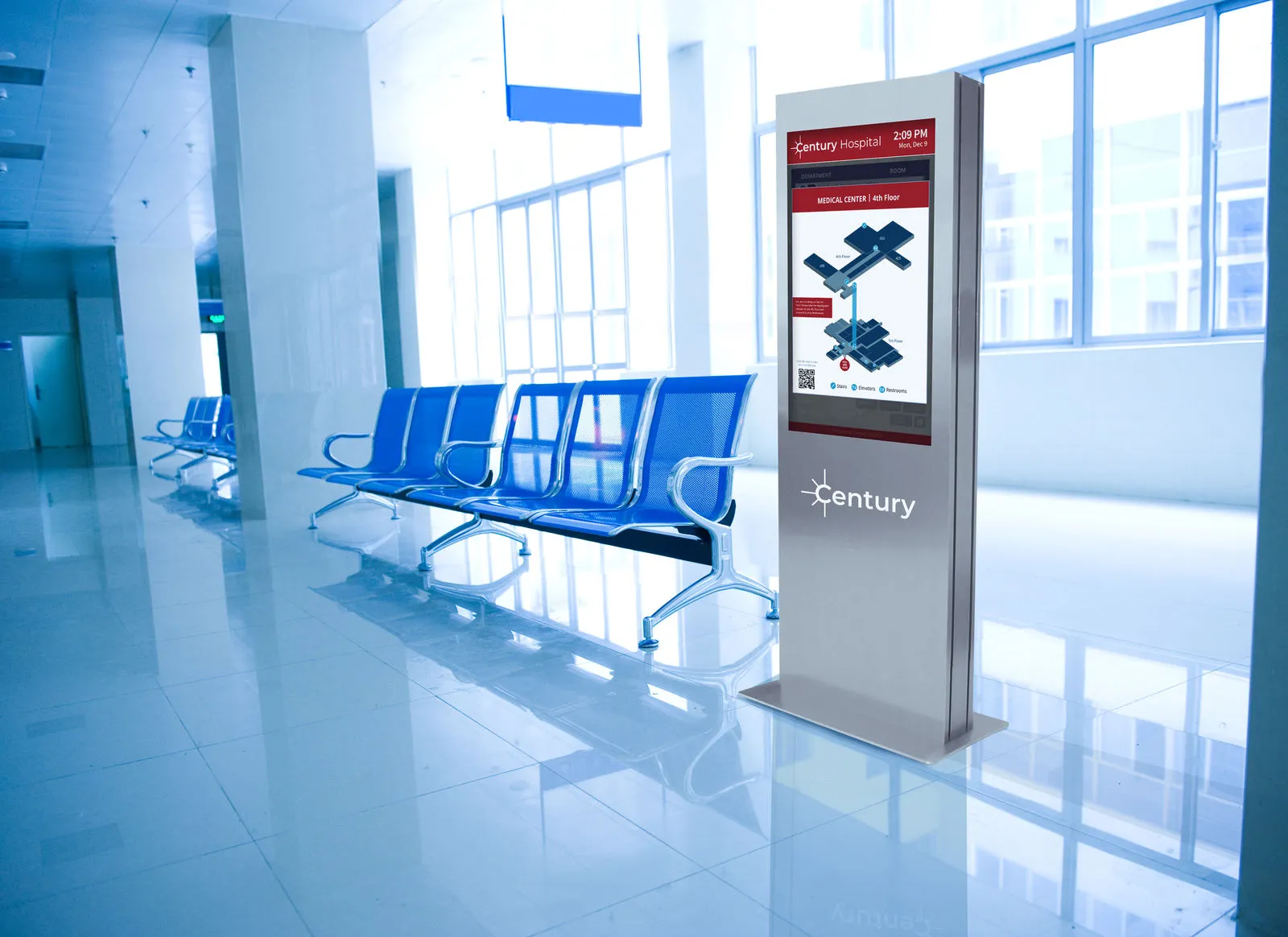
Nowhere was this shift more evident than in conversations around directories and wayfinding.
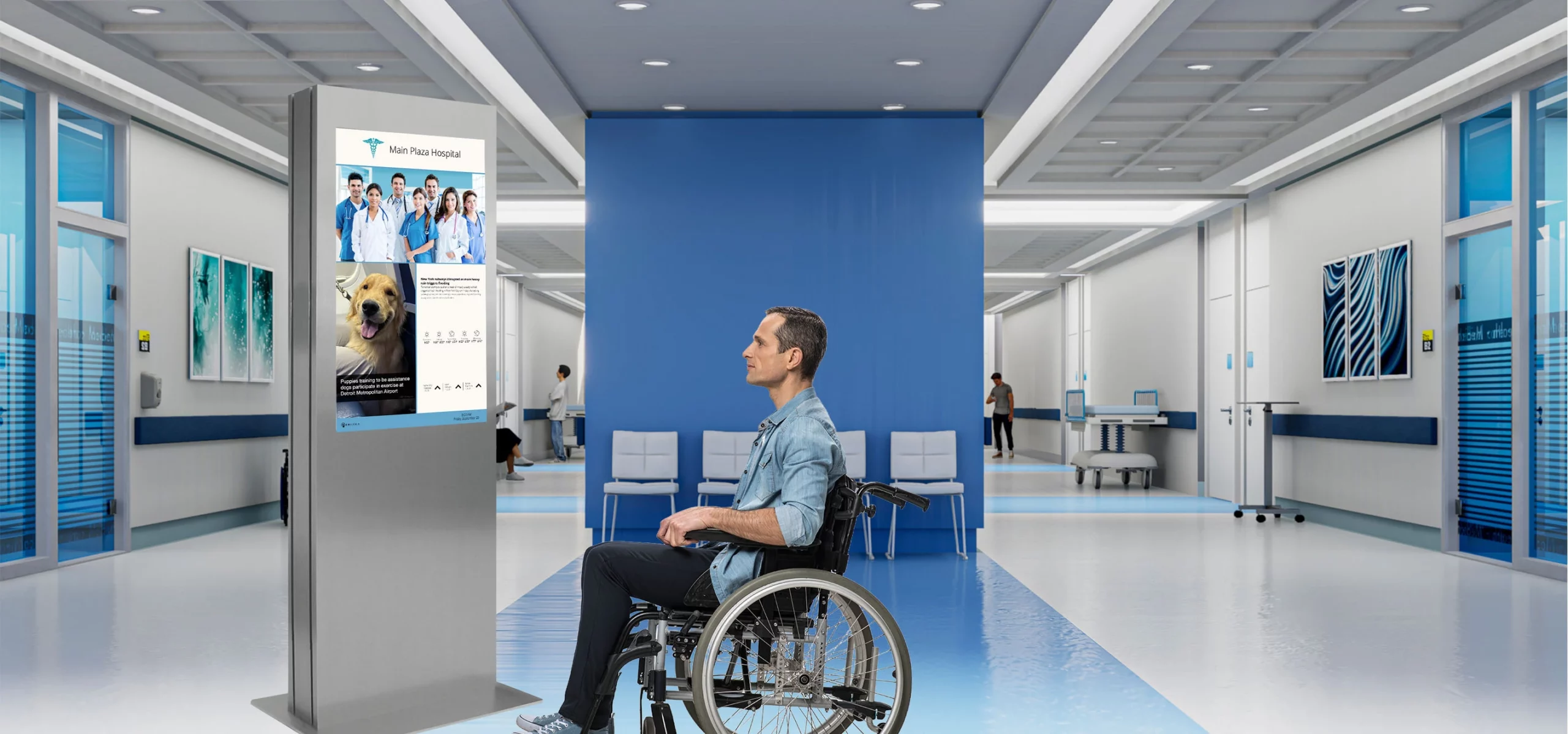
Historically, digital directories served a single purpose: Help people find their way. But that framing misses the bigger opportunity.
When someone interacts with a directory, they are expressing intent in its purest form. They are telling you exactly where they need to go, what service they’re seeking, and in many cases, how urgently they need it. That interaction should not end with a map.
The most forward-thinking healthcare campuses are starting to treat digital directories as a central engagement platform, not a standalone tool. One that combines:
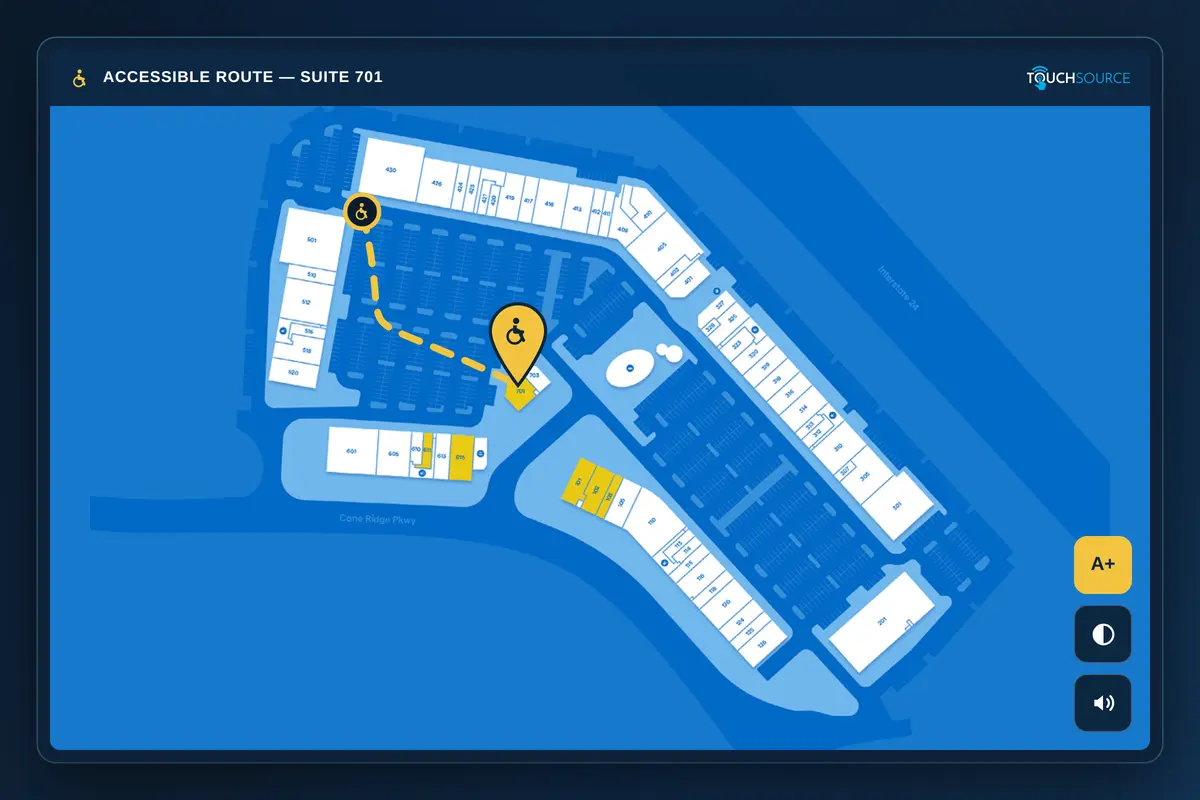
- Wayfinding that reduces friction and improves patient satisfaction
- Real-time announcements that keep visitors informed and reassured
- Contextual content that aligns with where someone is going
- Monetization opportunities through relevant, location-aware advertising
- Data insights that reveal traffic patterns, demand, and behavior
This is the difference between a directory system and a digital experience platform.
And it directly answers a question we get a lot at TouchSource: What is the best digital directory solution for healthcare campuses?
The answer is evolving, but it is increasingly clear. The best systems are those that unify wayfinding, communications, and engagement into a single, measurable platform.
Why Wayfinding Alone Is No Longer Enough
One of the clearer shifts we saw throughout the event is how quickly expectations are changing around what a directory system should actually do.
For a long time, wayfinding was the job. Help someone get from point A to point B as efficiently as possible.
That is still critical, but it is no longer sufficient in itself.
Healthcare environments are dynamic by nature. Schedules change. Departments move. Patients arrive with different levels of urgency and uncertainty. In that kind of environment, simply providing directions solves only part of the problem.
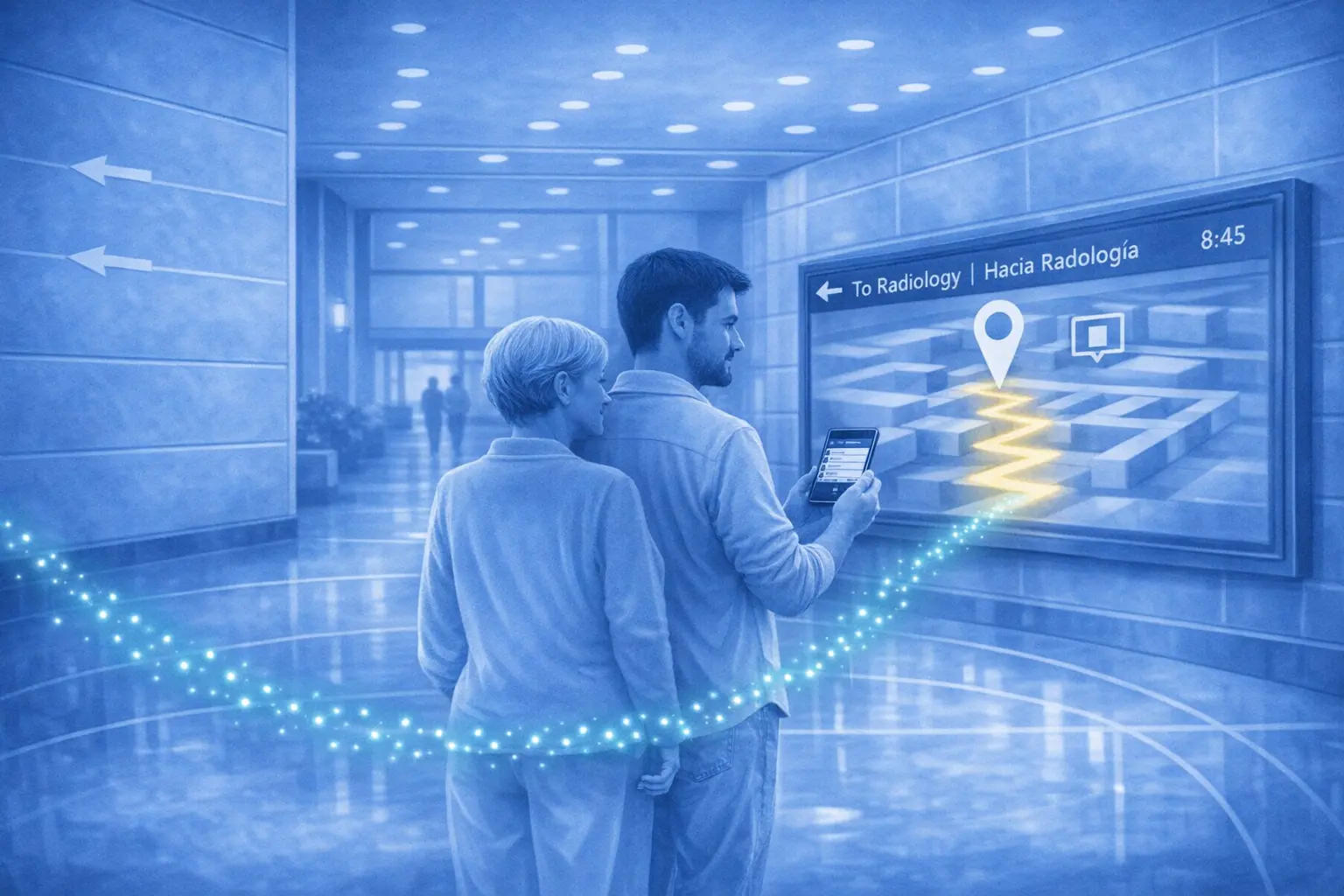
What operators are starting to prioritize is something broader: the ability to communicate in real time, in context, during the journey itself.
That is driving a move toward more integrated systems that can:
- Guide a patient to their destination without friction
- Surface timely, relevant updates along the way
- Deliver information that reduces anxiety and confusion in the moment
- Adapt messaging as conditions change throughout the day
In other words, navigation and communication are no longer separate functions. They are converging into a single experience.
And that is where the real value is being created, not just in helping people find their way, but in helping them feel informed, confident, and supported throughout the process.
The Role of AI and Real-Time Context
AI came up in nearly every conversation, but not as a buzzword. Instead, it was positioned as a catalyst to rethink how things have always been done.
There’s an openness to experimenting with AI in healthcare real estate, especially when it ties to something tangible like patient experience scores or revenue.
In other words, the gap between what people have today and what they believe is possible is becoming more obvious.
From Vendors to Strategic Partners
Another consistent theme at BOMA was the shift in how organizations evaluate partners.
There is less interest in buying standalone products and more interest in working with teams that can help map technology to outcomes.
Healthcare real estate is complex. Implementing a modern digital experience is not just a hardware decision. It is a strategy decision that touches operations, IT, patient experience, and revenue.
The organizations moving fastest are the ones looking for partners who can help them think through:
- Where digital engagement fits into their broader strategy
- How to measure impact across patient experience and revenue
- How to future-proof their infrastructure as expectations evolve
- How to use AI to improve efficiency and patient experience while protecting sensitive information
Where This Is Headed
The assumptions around technology in healthcare are changing. Directories are no longer just directories, and wayfinding is no longer just navigation. Digital infrastructure is becoming essential to how healthcare environments operate, communicate, and generate value.
Healthcare properties are also beginning to embrace local and programmatic advertising on digital directories to help offset operational costs.
The question is no longer whether to invest in digital, but how to make it work harder across the entire patient journey. If you’re exploring what that could look like for your portfolio, we should talk.