
The Emotional ROI of Digital Wayfinding Signage

Imagine this:
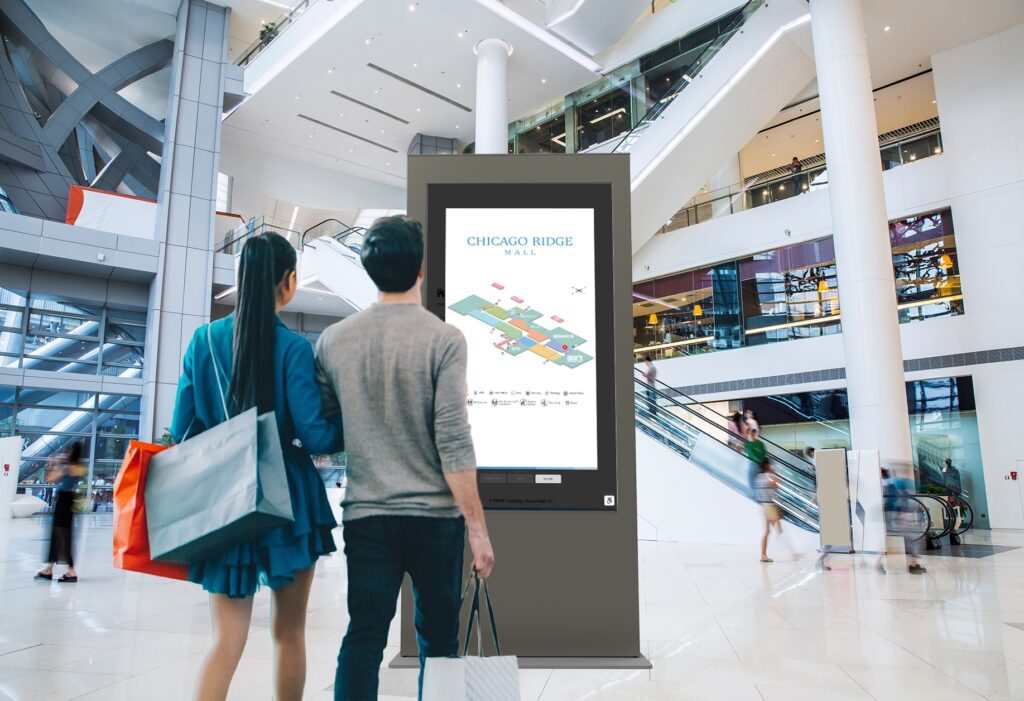
A visitor arrives for a meeting in a 40-story glass tower. They’re greeted by digital wayfinding signage that instantly recognizes their meeting room, suggests the fastest route, and highlights a coffee shop along the way. Instead of fumbling for directions, they feel at ease — confident, even impressed.
This emotional ease matters.
Lost visitors aren’t just late; they’re frustrated and even anxious. That frustration colors their perception of the property and the businesses inside. In commercial real estate, where every tenant experience counts, commercial building signage has the power to reinforce or erode your brand — silently, in the background.
From Static Signs to Digital Wayfinding Signage
The best commercial signage doesn’t just point the way; it tells people: We’ve thought about you.
That means:
- Blending aesthetics with clarity — signage that complements your architecture.
- Using consistent visual language across physical and digital spaces.
- Placing information so it appears before a moment of uncertainty.
This experience is hard, if not impossible, to accomplish with static building signage.
Because static signage has a fixed life span. When a tenant moves, or a floor layout changes, new panels must be printed and installed — often weeks after the change. Outdated signs leave visitors confused and property teams scrambling to provide verbal directions.
Digital wayfinding signage changes the game. Property managers can instantly update maps, tenant names, or event details without waiting for a print order.
Newer commercial building navigation solutions take this further with:
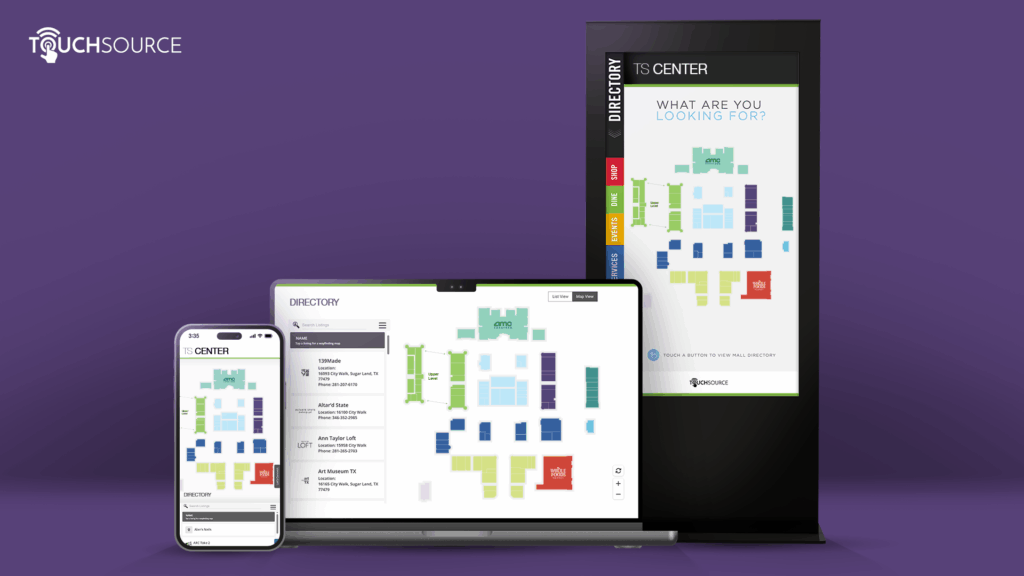
- Animated, turn-by-turn paths that guide visitors visually.
- Zoom-and-pan maps where labels appear as you zoom in, mimicking the experience of a smartphone.
- Accessibility modes that instantly reroute for wheelchairs, walkers, or strollers.
- Multi-stop routing, ideal for healthcare campuses or retail trips with multiple destinations.
- Touchless scan-to-mobile, letting visitors carry the live map on their phone.
Curious about how other properties deliver contactless wayfinding in commercial real estate? Our contactless Digital Content Gallery is a great place to start.
The Numbers Behind Digital Wayfinding Signage
If you think digital wayfinding signage is just a nice-to-have, the market says otherwise.
- The digital wayfinding solutions market grew from $0.96 billion in 2024 to $1.07 billion in 2025 — an 11.1% CAGR — and is on track to reach $1.62 billion by 2029.
- The digital signage market as a whole, which includes wayfinding, is projected to climb from $28.8 billion in 2024 to $45.9 billion by 2030.
- In hospitals, 85% of patients ask for directions, and 30% of first-time visitors get lost — costing time, productivity and goodwill. Commercial properties face similar risks.
The takeaway? In 2025, clear commercial building navigation isn’t just a courtesy — it’s an economic driver and a brand differentiator.


7 Ways to Improve Engagement with Digital Signage
Harness the Power of Digital for a Better Experience with Less Work Digital building technologies have changed the way businesses interact with customers by transforming user experiences. Whether in healthcare,…
Read more
Customer Case Study: Macomb Medical Campus Delivers Eye-Catching Directory
Lost Patients Create “Eye” Strain An interview with Property Manager Jill Long, Liberty Property and Asset Management, Manager of the Macomb Medical Campus I manage 17900 23 Mile Road in Macomb,…
Read more
5 Key Advantages of Digital Directories for College Campuses
Is your school looking to upgrade its campus navigation? Education campuses can be complex labyrinths of buildings, walkways, and open spaces. Navigating such an intricate maze can be daunting for…
Read moreAccessibility & Compliance: Meeting Every Visitor’s Needs
Modern wayfinding isn’t just about convenience — it’s also about inclusivity and compliance. In many jurisdictions, accessibility isn’t optional, and digital wayfinding signage makes it easier to meet ADA and other regulatory requirements. Interactive kiosks can offer adjustable font sizes, high-contrast color modes, and audio navigation for the visually impaired. Mobile wayfinding allows users to access routes optimized for wheelchairs, walkers, and strollers — making sure no visitor is left struggling to find their way.
For property owners, this proactive approach reduces liability while enhancing brand reputation. Visitors remember how a space made them feel, and providing an equitable navigation experience sends a powerful message: everyone is welcome here. TouchSource solutions can deliver these features seamlessly, ensuring properties are both compliant and genuinely accessible to all.
Designing for Humans First
The best commercial building signage doesn’t just point the way — it shows you’ve thought about the people who use your space.
It does this by:
Blending aesthetics with clarity — signage that complements your architecture.
Using a consistent visual language across physical and digital spaces.
Placing information where it’s needed, before uncertainty arises.

Digital wayfinding solution for a multi-floor commercial building.
Digital wayfinding is your building’s silent conversation with every visitor. In 2025, that conversation is more important than ever. It says:
- We care about your time.
- We value your comfort.
- We want you to feel confident in this space.
And in a competitive commercial real estate market, that’s not just good design — it’s smart business.
Whether you’re guiding a first-time visitor or a daily tenant, every step counts. Start with one digital display. One clear direction. One effortless experience — because in 2025, the way you guide people is part of how you grow.