

How to Plan an Outdoor Digital Signage Kiosk: 5 Critical Questions
Are you considering installing an outdoor digital signage kiosk at your property, campus, or commercial site?
An outdoor digital signage kiosk is a weatherproof digital display installed outside buildings to provide information, directories, advertising, or wayfinding.
While outdoor digital signage can create a powerful first impression and improve visitor navigation, planning the installation involves more than simply choosing a display. Outdoor kiosks require special infrastructure, environmental protection, and installation planning.
Outdoor Digital Signage Kiosk Planning: Key Considerations
When planning an outdoor digital signage kiosk, property owners should evaluate five critical factors before starting their project:
Power and internet availability at the installation site
Weatherproofing and environmental durability
Screen brightness for sunlight readability
Security features to prevent theft or vandalism
Installation engineering and local permitting requirements
Addressing these considerations early helps prevent costly delays, redesigns, or infrastructure issues during installation.
Outdoor Digital Signage Requirements (Quick Facts)
1. What Infrastructure Is Required for an Outdoor Digital Signage Kiosk?
Before selecting hardware or designing content, it’s important to confirm whether the installation site has access to reliable power and internet connectivity.
Indoor digital signage displays can often connect to nearby outlets, but outdoor kiosks typically require underground power and data lines. In many cases, this involves trenching through existing concrete, pavers, or landscaping to run electrical and fiber connections.
Reliable connectivity is essential if your kiosk will display:
Live transit or transportation information
News feeds or real-time updates
Interactive directories
Cloud-managed content
Wireless internet can sometimes work for outdoor signage, but most organizations prefer hardwired connections for reliability and uptime.
Before beginning the project, consult with a contractor or facilities team to evaluate the site’s infrastructure and installation requirements.

2. How Weatherproof Should an Outdoor Digital Kiosk Be?
Unlike indoor displays, outdoor digital signage kiosks operate 24/7 in changing environmental conditions.
Your kiosk should be designed to withstand:
Heavy rain and humidity
Snow and ice
High winds
Extreme heat or freezing temperatures
Commercial-grade outdoor kiosks often include:
Powder-coated weather-resistant enclosures
Internal ventilation systems
Washable air filters
Water mitigation channels to prevent pooling and corrosion
These design features help ensure long-term reliability, particularly in regions with extreme seasonal weather.
3. How Bright Does an Outdoor Digital Signage Display Need to Be?
Sunlight is one of the biggest challenges for outdoor digital signage.
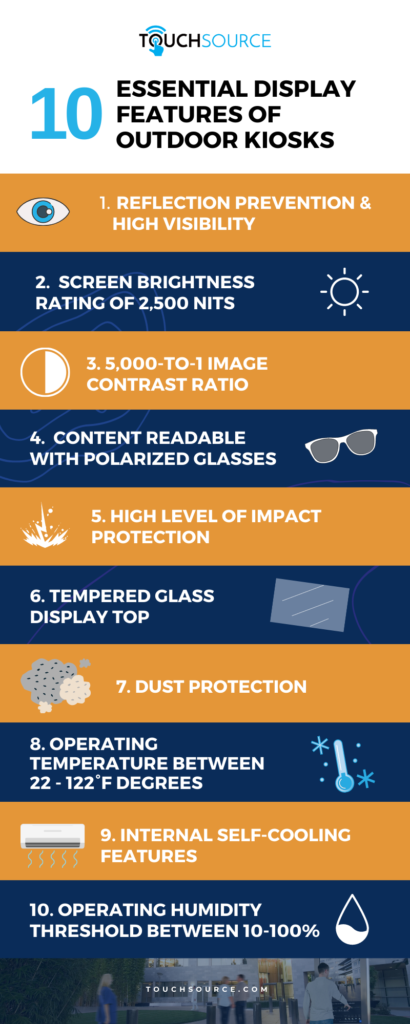
To remain readable in direct sunlight, outdoor displays must be significantly brighter than indoor screens. Most indoor commercial displays operate between 300–500 nits, while outdoor digital signage typically requires 2,500 nits or more.
Higher brightness ensures:
Clear visibility during daylight hours
Legible text and graphics
Better user engagement and interaction
Without sufficient brightness, outdoor screens can become difficult or impossible to read in bright conditions.
4. How Can Outdoor Digital Kiosks Be Protected From Theft or Vandalism?
Because outdoor kiosks are accessible 24 hours a day, security should be considered during the planning phase.
Modern outdoor digital signage kiosks often include built-in protection features such as:
Reinforced enclosures
Locking access panels
Commercial-grade glass
Secure mounting systems
These measures help protect the display hardware while reducing the risk of tampering or vandalism.
Proper placement of the kiosk in well-lit, visible areas can also help improve security.
5. What Permits or Installation Requirements Are Needed?
Proper installation is essential for both safety and regulatory compliance.
Outdoor kiosks must typically be mounted on a secure foundation that prevents tipping or structural movement. In many cases, this requires:
Engineering analysis of the foundation design
Professional installation
Approval from local building authorities
Municipal codes may also regulate:
Signage height
Placement on public property
Electrical installation standards
Consulting with local officials and contractors early in the process helps ensure your project complies with all local regulations.
Frequently Asked Questions About Outdoor Digital Signage Kiosks
1. How bright should an outdoor digital signage display be?
Outdoor digital signage typically requires 2,500+ nits of brightness to remain readable in direct sunlight.
2. Do outdoor digital kiosks require permits?
Yes. Many municipalities require permits or engineering approval for permanent outdoor signage installations.
3. Can outdoor digital kiosks use wireless internet?
Wireless internet can work in some situations, but hardwired fiber or ethernet connections are generally recommended for reliability.
4. Are outdoor digital kiosks weatherproof?
Commercial outdoor kiosks are designed with weather-resistant enclosures, ventilation systems, and protective coatings to withstand environmental conditions.
Outdoor digital signage can offer serious value to your organization. With an outdoor digital signage kiosk, you’re bound to increase foot traffic, usage, visibility, and customer interactivity. Proper planning and budgeting for these items will lead to a much better experience from conception to implementation. Knowing what questions to ask and what to look for will help you plan a successful project from start to finish.
5. How much does it cost to build an outdoor information kiosk?
The cost to build an outdoor information kiosk will vary based on hardware, software features, and other factors. Generally, the cost of a commercial-rated turnkey outdoor information kiosk may begin at $25K.
With a turnkey outdoor information kiosk from TouchSource, all of the software and setup is done for you. When you receive it, it is plug and play. From then on, you will be able to easily make any updates through our simple-to-use content management platform. Whenever needed, unlimited support is available from our North American-based engineers.
Get Started With Your Outdoor Information Kiosk Project
Outdoor digital signage can increase visibility, improve wayfinding, and create more engaging visitor experiences for your property.
However, successful projects begin with proper planning. Understanding infrastructure, environmental conditions, installation requirements, and security considerations will help ensure your kiosk performs reliably for years to come.
TouchSource has deployed digital directory and kiosk systems in commercial real estate environments across North America.
If you’re evaluating a project, request a consultation from TouchSource to explore your options.